AI Interview Intelligence. Every Interviewer, at Their Best.
It joins the call with you, briefs you on the candidate’s full story, suggests questions live, flags suspicious behaviour, and drafts the scorecard, all in real time – while you run the conversation and make the final decision.


Ready to Raise the Bar on Every Interview?
Full context going in. Live guidance in the call.
Benefits and Use Cases
 Live probing
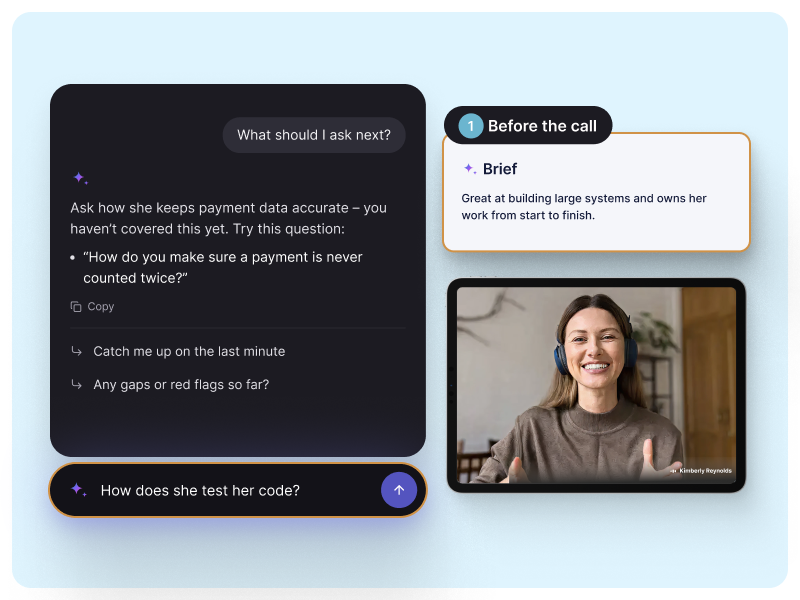
Know the whole story before saying hello.
Most interviewers skim the resume minutes before the call. With Interview Intelligence, they start from a full brief instead.
It shows what the candidate said in screening, which topics earlier rounds already settled and where the gaps still are. Round four stops sounding like round one.
 Real-time guidance
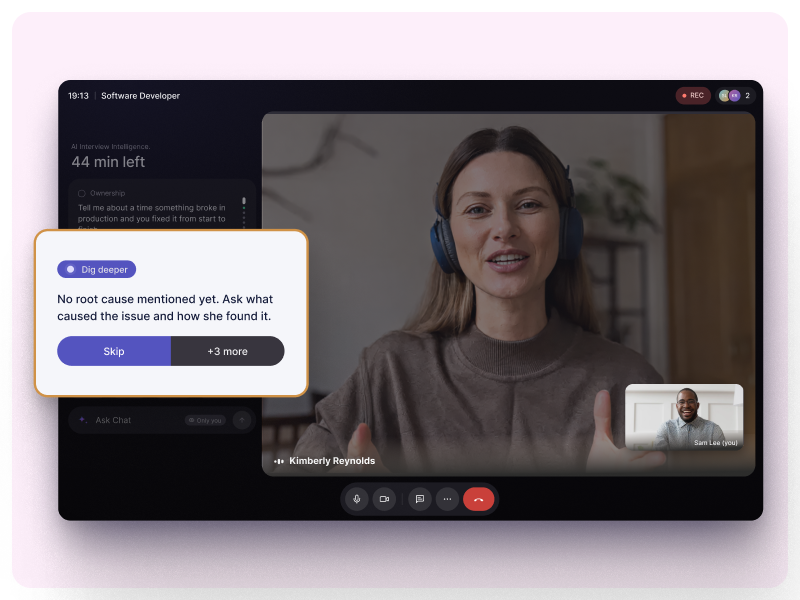
Your next question, ready while they’re still talking.
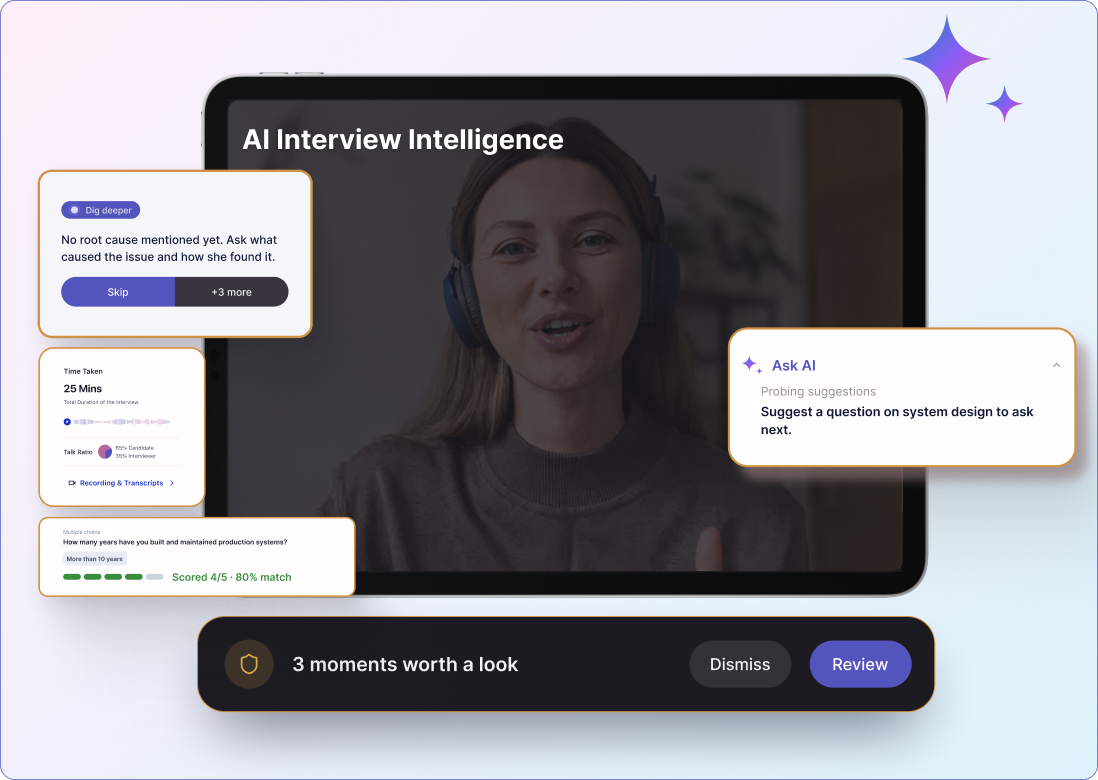
The agent follows the conversation in real time. Thin answer? A “dig deeper” prompt appears with a sharper follow-up. Running low on time with topics still open? You see exactly what’s not covered yet. Your plan ticks itself off as you go, and the notes take themselves. Stuck? Ask your agent for the next question.
 Your competency framework
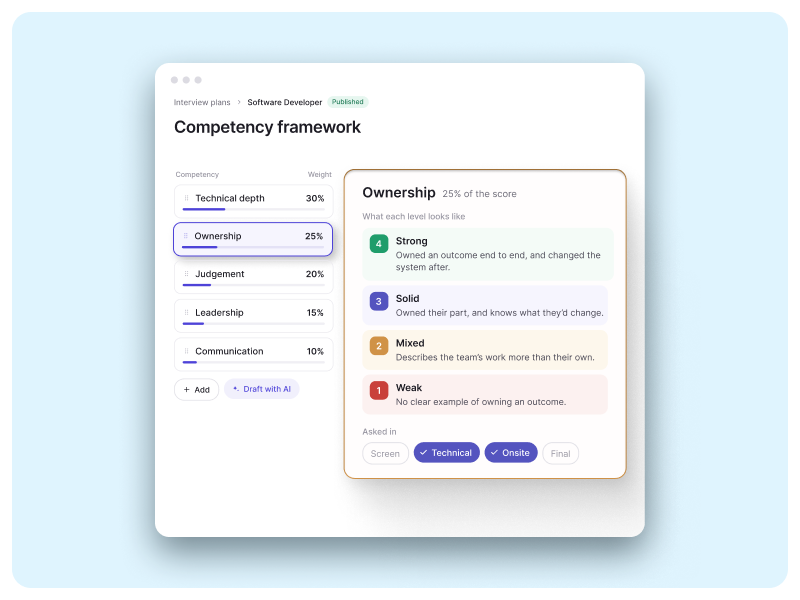
Judge every candidate on a consistent framework, not a gut feel.
Turn your own competency framework into a plan for each round, then check off every criterion live – so candidates are compared on the same things, not on who had the better small talk.
 Integrity signals
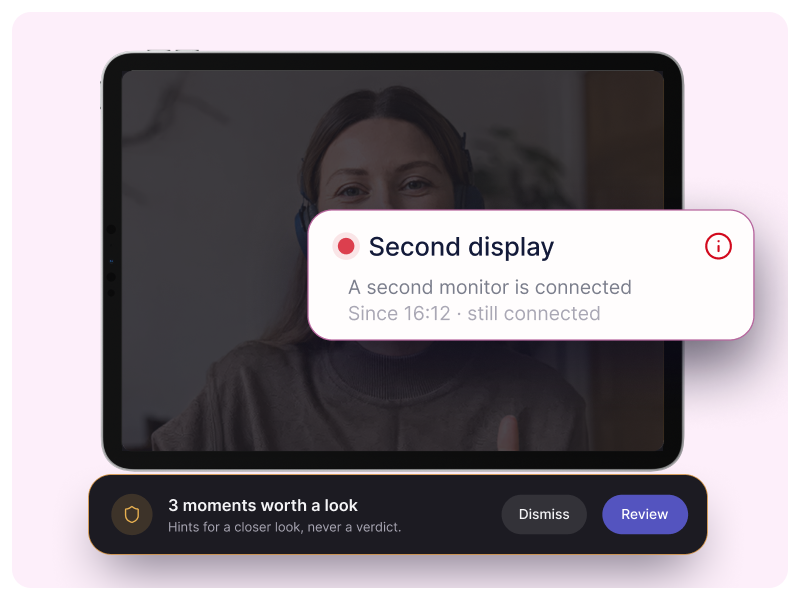
Second monitor or hidden overlay: flagged live.
Detect and flag suspicious behaviour – a second monitor, change of tabs, AI-assistant hotkeys – for your interviewer to review. It never accuses or rejects anyone on its own.
 Scorecard draft
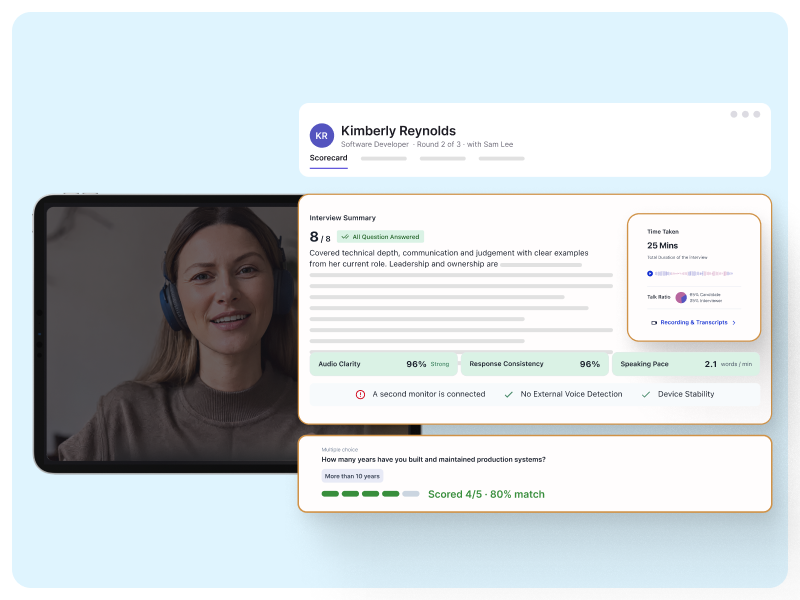
The call ends. Your scorecard is already drafted.
When the call ends, the scorecard is already drafted, with each rating tied to what the candidate actually said. Review it, add your recommendation and submit. Your interviewer still makes the call.
Features and Capabilities
Candidate briefs
One page before every interview: the resume, application, screening results and what earlier rounds covered, plus claims worth probing.
Probing and follow-up questions
Suggests a probe when an answer is thin, and a follow-up when it’s worth going deeper.

Ask anything
Ask the chat for another question or what the resume says, right in the call, without breaking your flow.

Live coverage tracking
Checks off each scorecard criterion as it’s covered, keeps key quotes and nudges you when time runs short.
Integrity signals
Detects and flags suspicious behaviour, such as a second monitor, hidden helper windows or a fake camera, for review.
Drafted scorecards
Fills your scorecard from the conversation, with quotes and time stamps, for the interviewer to edit and submit.
Customer Stories


Built to Work With Your ATS


What’s New


Make Your Recruiting Extraordinary
See Us in ActionFrequently asked questions
No. A person runs every interview and makes every decision. Interview Intelligence briefs the interviewer, suggests questions, flags things to check and drafts the scorecard. Nothing is scored, submitted or rejected without the interviewer.
A notetaker summarises the meeting after it ends. Interview Intelligence knows the job, your scorecard and what earlier rounds covered. It prepares the interviewer before the call, guides them during it and drafts a scorecard tied to your criteria afterwards.
Google Meet, Microsoft Teams, Zoom and Joveo’s own meeting room, which needs no calendar access. For in-person interviews, interviewers can run it on a laptop or phone.
Interview Intelligence detects and flags suspicious behaviour, such as a second monitor, someone else in the frame, hidden helper windows or keyboard shortcuts used by AI cheating tools. Each flag is for the interviewer to review – none leads to an automatic rejection.
Yes. Start with the conversation only and get a transcript and draft review. Add the CV and job description for a brief and live guidance, then scorecards and earlier rounds for the sharpest suggestions. You choose what the brief shows, including hiding earlier rounds for blind interviews, and recording always follows your policy.
No. Interview Intelligence works on its own with the resume, job and scorecard. If you also use Joveo’s AI Chatbot or AI Interviewer, those results feed the brief automatically, so each interviewer sees the candidate’s full story.