Recruitment marketing, without the marketing spin
Welcome to the first edition of Joveo’s monthly newsletter, Recruiting Unfiltered, your only source for what’s going on in the world of hiring, without buzzwords, BS, or Bersin. We know what you’re thinking, and yeah – it’s a friggin’ newsletter.
Most hiring newsletters are really, really boring – they’re either thinly veiled press releases, cut and paste ChatGPT responses (complete with unnecessary em dashes and emojis), or full of superficial and superfluous commentary and analysis from content marketers who have never owned a funnel, managed media spend, or had to explain to leadership exactly why “more applicants” doesn’t mean “better hires.”
We’re going to try to do better.
And if we can’t, well, at least we’ll keep things interesting.
Job Market: Stuck in a Moment You Can’t Get Out Of
Look, here’s the thing.
As we enter 2026, it’s important to take a look at the bigger picture. And if you want to know what’s happening in recruiting, you’ve got to know what’s going on with the economy; after all, we’re in a codependent relationship that’s a bit toxic, but somehow always seems to work out.
The good news is that rumors of a recession seem to have been greatly exaggerated. But so too is the sentiment that things are turning around. As we enter 2026, the economy – despite some encouraging signs from the year-end market rally – didn’t even pretend to rebound or even fake a comeback. It’s just kinda gradually continued to slow down… and as we enter the year, it seems like we’re pretty well stuck.
According to the US Bureau of Labor Statistics, total payroll growth in 2025 averaged about 49,000 jobs per month, down sharply from 168,000 per month in 2024. That’s not momentum – that’s a rounding error.
Technically, jobs are still being added. Practically, it feels like the labor market hit pause and forgot the remote. Of course, if you’re recruiting, you probably kinda knew that already.
The bad news: it doesn’t look like it’s going to get any better in the first half of the year. The good news? Hiring is still happening; technically speaking, of course, the economy continues to add jobs. In reality, though, it kind of feels like the entire labor market got hit with a hiring freeze, and it’s starting to get pretty chilly out there.
Of course, if you’re recruiting, you kinda knew that already.
The market right now is what economists call “low-hire, low-fire.” Most recruiting professionals usually call it something a little less polite. Here’s the thing: after a year of restructuring, reorgs, and RIFS, it looks like the mass layoffs are finally, well, laying off.
As 2026 gets started, there seems to be few signals that suggest organizations are planning on laying off people at the same scale as we became used to over the past year. Of course, workers aren’t leaving their jobs, either. The quit rate has drifted back toward pre-pandemic levels, hovering around 2.0%, according to the latest JOLTS data.
That means fewer exits, and less attrition – which is generally good for HR, but for recruiting? Well, obviously, less churn means fewer backfills. Fewer backfills mean fewer reqs. And fewer reqs mean that recruiters will likely remain stuck in an industry wide existential crisis.
Basically, the unemployment rate is “fine,” unless you’re in talent acquisition; in which case, it’s a lot like recruiting inside a snow globe these days. Everything’s there, but nothing’s really moving.
A Tale of Two Economies
It’s both the best of times, and it’s the worst of times. And like every Dickensian story, here’s where things get messier – and infinitely more interesting. It’s a fallacy to act as if the entire labor market is a homogenous monolith, because the fact is, there are actually several labor markets occurring simultaneously, with parallel routes but running at drastically different paces.
It all depends on where you sit. If you’re a knowledge worker (“white collar,” as the Boomers refer to them), working in a field like software, media, or professional services, it should come as no surprise that demand for salaried workers remains cooler than Miles Davis.
Recruiters have seen reqs for exempt, experienced workers get tighter, with a trend away from generalist roles, and towards more tightly defined experience requirements that mean that the few external hires that are happening generally tend to look a lot more like lateral moves than growth opportunities. Companies are taking longer to hire, and being much more cautious when extending offers, in an effort to maximize their increasingly limited white collar headcount.
Meanwhile, though, if you’re in healthcare, hiring continues to boom, with demand reaching historical highs. The same goes for construction, skilled trades, and light industrial workers. People still get sick, buildings still need wiring, and consumer goods still need assembling. Frontline workers, even well after the pandemic, are seen as essential. After all, AI still can’t unclog a toilet.
While the rest of us non-essential workers continue to debate the relative merits of RTO policies, that’s not an option for the most in demand, fastest growing roles – which, ironically, tend to also be the least impacted by new and emerging technologies.
And then there’s the weird part.
AI didn’t just “replace jobs.” It created new ones. Not glamorous ones, but necessary ones. Stuff like data labeling, annotation or quality assurance. Machine intelligence can’t run without human labor – and lots of it. Entire employment categories now exist to make models usable in the real world. Even the AI industry has started acknowledging this out loud.
This isn’t a boom or bust kind of a market story. It’s more of a reshuffle. And recruiting has to operate across all of it, at the same time, with less dedicated resources and headcount.
Good luck.
Why The “Big Stay” Is A Big Deal
Remember those halcyon days, just after the pandemic when we were all freaking out about the “Great Resignation?” You know, when workers changed jobs about as frequently as they changed clothes. The six figure FAANG jobs with no experience required, and 15% raises for everyone else. Those ubiquitous counteroffer conversations.
Yeah, that’s pretty much a thing of the past at this point, like social distancing. In fact, now, we’re seeing pretty much the opposite trend impact the workforce, with most workers choosing to negotiate internally as opposed to looking at new opportunities externally.
Data suggests a rise in internal negotiations, with merit increases, title tweaks and reporting structures becoming the most effective employee retention strategy available to companies. Employee engagement scores might be at an all time nadir, but for now, most workers seem to be signaling that career uncertainty feels way worse than job dissatisfaction.
They’re probably right, for what it’s worth.
The theme for TA teams here is that 2026 is shaping up to be the year of the Big Stay. Not because your people are suddenly satisfied with their jobs or feel engaged at work. It’s because they’re being cautious.
And nothing kills churn like caution. Which might be why the market feels like it’s been stuck on pause for the past few quarters.
Welcome to purgatory. It’s not great, but it’s not bad either.
Too Many Applicants, Not Enough Candidates
As every recruiter knows, when posting volume slows, applications do pretty much the exact opposite. Which is great, or else TA would have nothing to complain about.
According to Joveo’s own marketplace data, applications per job in the US have increased nearly ninefold since 2022, climbing from well under one per role to nearly six per role by late 2025. The UK is close, growing roughly 8x in the same time frame.
There are other factors at play that have nothing to do with the economy, of course. From AI-generated resumes to one click and mass application functionalities, it’s never been easier than ever to apply for a job – and hundreds of applicants do, sometimes thousands, for pretty much every job that’s posted.
And somehow, it seems, not one of them is actually qualified enough to pass your perfunctory prescreen.
Don’t worry – you’re far from alone. External benchmarks suggest that employers everywhere seem to be struggling with the same pattern: a sharp spike in application volume year over year, with much lower interview conversion rates and slower time to fill than only a year ago.
External benchmarks show the same pattern: applicant volume is up sharply year over year, while conversion to interviews and offers lags behind.
That’s not a sourcing problem, or a market supply problem. That’s a signal problem.
And with so much noise on the market, it’s a good reminder to all of us why volume metrics are more or less meaningless in talent acquisition. If you can’t convert, you’d better start praying.
The Fake Candidate Doom Loop
Of course, not all of these applicants are real, as most recruiters are well aware of, at this point. And this is where it gets kind of awkward.
Because, as concerned as we are about “fake candidates,” data shows that a significant percentage of active job postings aren’t real, either. Recent surveys suggest that over a third of all job ads may be “ghost jobs, ”posted to signal growth to investors or employees, build “talent communities” and pipelines, or simply to utilize their existing recruitment advertising inventory.
This is not that new, of course; “bucket reqs” and job ads that aren’t linked to active roles have been around for as long as digital job postings. But what’s interesting is that, despite it having long existed somewhere between urban myth and recruiting edge case, candidate fraud is becoming increasingly prevalent.
In fact, Gartner now predicts that by 2028, one in four candidate profiles globally could be fake or AI-generated. That’s super annoying – and super risky from a security and compliance perspective. Which means that increasingly, recruiters are going to find themselves as the surprise guests at an increasing number of incident response meetings.
Fake recruiters trying to hire fake candidates is the definition of a doom loop. And it’s likely to continue spiraling out of control, threatening to erode any productivity and efficiency gains recruiting organizations may actually realize with AI.
Candidates use AI to apply faster; recruiters use AI to filter more quickly. Candidates use more AI to bypass those filters. Everyone trusts the process a little less, and even more enmity builds between job seekers and those companies hoping to hire them.
The good news is, candidate experience is irrelevant when the candidate isn’t even real.
The World of Work: Hiring Without Borders
Even if we zoom out from the US and look at the global labor economy, the jobs picture doesn’t get any rosier. If anything, the US is partying like it’s 1999 compared to most other global markets. The International Labour Organization (ILO), in fact, revised its 2026 outlook downward, projecting 53 million new jobs globally instead of 60 million, and trimming employment growth to 1.5%.
This is causing a regression across markets, with high-income economies seeing formal job creation and workforce participation stall, while developing nations seem to be reverting back to largely informal labor economies. The ILO predicts that trade tensions could only exacerbate the global employment situation.
Jobs still exist, and demand still exists, but again, openings are flat, and companies are being more selective about offshoring, outsourcing and hiring multinational workers. This makes the current situation even more perilous for recruiting and hiring leaders.
And, of course, increased scrutiny over job openings leads to increased scrutiny over the function whose responsibility it is to fill them – which makes the talent acquisition function more critical and more strategic than ever before.
AI Isn’t Killing Jobs, Only Lazy Job Design
Here’s the part that gets over-dramatized.
The World Economic Forum estimates AI-driven disruption could displace 92 million roles by 2030 while creating 170 million new ones, for a net gain of 78 million jobs.
At the same time, 39% of workers’ core skills are expected to change by 2030, with AI, data, and cybersecurity rising fast. Human skills like creative thinking and resilience don’t disappear. They become more valuable.
This isn’t an apocalypse. It’s a long, messy rewrite of job architecture.
For recruiters, that means job descriptions have to be updated. Roles have to be reimagined, and requirements refined. Hiring managers need to finally start both hiring, and managing – as opposed to most, who currently do neither. Comp bands have to catch up with consumer pricing reality.
The world of work is reinventing itself. Recruiting is no exception.
And all we can say is, it’s long overdue.
Predicting Beats Explaining, Every Time.
That’s exactly why, last month, Joveo launched its newest feature, AI Staffing Advisor, a predictive intelligence platform that flags at-risk roles, forecasts fill rates, and points you at the jobs and tasks that actually move the needle before the chaos shows up in your KPIs.
It’s not another dashboard. It’s a real time decision engine that predicts fill rates, forecasts client demand, identifies the most fillable job orders and flags roles where revenue is at risk or recruiter workloads need balance.
AI Staffing Advisor gives staffing teams the insights they need to act decisively, shows them where to focus next, and recommends what they should do to drive the greatest impact.
Joveo’s agentic AI capabilities reflect a broader shift happening across marketing and workforce technology, moving from “here’s what happened” to “here’s what’s happening next – and here’s what to do about it.
AI Staffing Advisor: Read More
Product Page
Full Press Release
Explore the AI Staffing Advisor with Joel Laglee
Internet Therapy Break
Well, that 2026 preview was kind of a downer – so before we take this one home, here’s a quick reminder that the internet understands the pains associated with recruiting and hiring way better than most “thought leaders” giving conference keynotes.
Here are some of our favorite finds this week.
A now-viral r/recruitinghell thread analyzing thousands of “urgent” postings and concluding many had no real hiring intent. Equal parts data science and scream therapy.
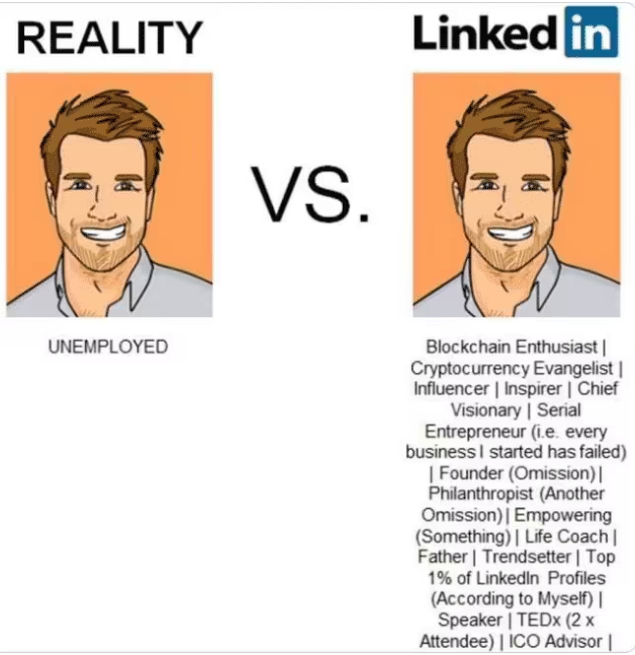
Resume memes making the rounds again, because apparently some things never get old. After the apocalypse, resumes and memes will probably be the only remnants of our civilization left standing, if we’re being honest.
Instagram reels dramatizing interview code-switching failures and passive-aggressive rejection emails. Painfully accurate, yet comforting. For reels.
POV: You Forgot To Code Switch in A Job Interview – A different kind of coding assessment, but easier to fake.
I Forced An AI Bot To Read 100 Million LinkedIn Profiles and Develop a TV Pilot Script – Talk about development hell.
Claude, Make Me a Billion Dollars – AI will do everything. Except, probably, make you rich. But it’s worth a try.
Everyone knows the system is weird right now. At least the memes are honest about it.
The TA Takeaway
If there’s a unifying theme here, it’s not technology. It’s clarity.
Clear signals to candidates about pay, expectations, and value.
Clear signals to recruiters about where to spend, where to pull back, and where effort actually converts.
Clear signals to leadership about what’s working now, not what looked good in a quarterly deck.
None of this requires a reinvention of recruiting. It requires letting go of habits that no longer earn their keep. National campaigns when local data is screaming for nuance. Dashboards that explain yesterday instead of steering tomorrow. Job content written like legal disclaimers instead of persuasion.
The encouraging part is this: The path forward is visible. The data is already there. The tools are finally catching up to the way hiring actually works. When you align spend with labor economics, lead with compensation instead of hiding it, and treat recruiting like the demand-driven system it is, outcomes follow. Faster fills. Lower waste. Fewer late-stage surprises.
Clarity converts.
Speed saves money.
Precision beats volume.
2026 won’t be about more AI buzz. It’ll be about measurable process integration, where AI insights aren’t dashboards you look at but operational levers that shift hiring outcomes.
The companies that win next year won’t be the ones who spent the most on volume. They’ll be the ones who spent the least on wasted activity. Because ultimately, that’s what hiring success is really all about.
Here’s to fewer resolutions and better decisions.
Stay connected with Joveo
Visit Joveo.com
Explore Joveo case studies
Follow Joveo on LinkedIn
Follow Joveo on X